Out of this World Project

Each semester in school we focus on a different niche in the design field, this semester we focused on commercial office design.

We took an existing space and used the floorplan to design an office space for the Marketing and Communications departments of SpaceX in Orlando, Florida.
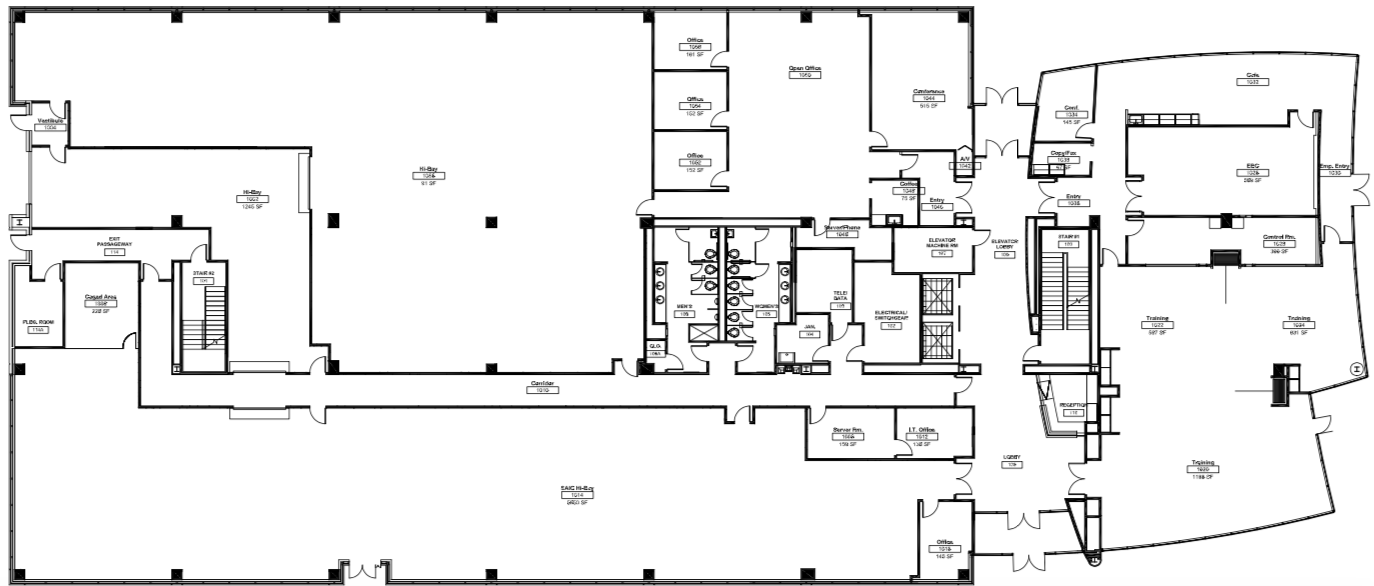
Original Floorplan

In the pre-design phases of the project, we did a lot of research on SpaceX and SpaceX’s culture.  We researched ergonomics and the best ways to design an office in order for it to function at highest capacity for SpaceX.

We took the groups of people in these departments and had to decide who needed to be adjacent in the floorplan.  We also had to decide how close or far away these people needed to be from the common spaces that everyone uses. We made an adjacency matrix and a bubble diagram to show our own ideas behind the adjacencies.

Adjacency Matrix and Bubble Diagram

We took every person or group of people in these departments a made a block diagram of where we were going to place them in the portion of the floorplan we chose to place them.  We used the information we concluded from the adjacency matrix and bubble diagram to place them in the block diagram.

Block Diagram

Our next step is to develop our concept.  Our concept portrays how we are going to design the space.  We have a concept name, concept statement, and inspiration pictures all included in the concept.

From here, we move out of the pre-design phase and into designing the floorplan of the space.  After choosing what portion of the floorplan we needed for our space, we took down or built walls to define our space.  The next step is placing the furniture in the new floorplan. While placing furniture we take into account building codes for egress and ADA purposes.
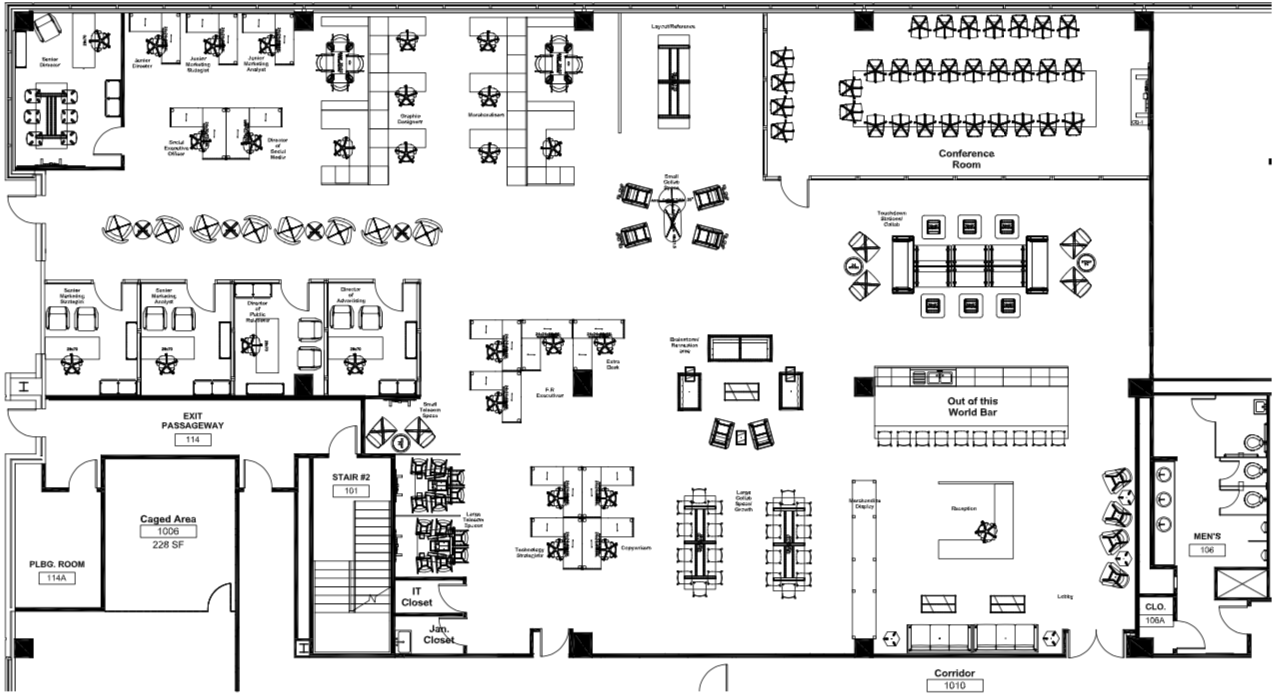
Furniture Floorplan

After placing the workstations, private offices, conference room, reception/lobby, we also furnished other ancillary areas.  When that was finished, we followed the state of Florida’s electrical codes placing outlets every 12 feet and adding electricity through either junction boxes or floor outlets to every workstation and lounge space and also added the data and telephone hookups at every workstation.
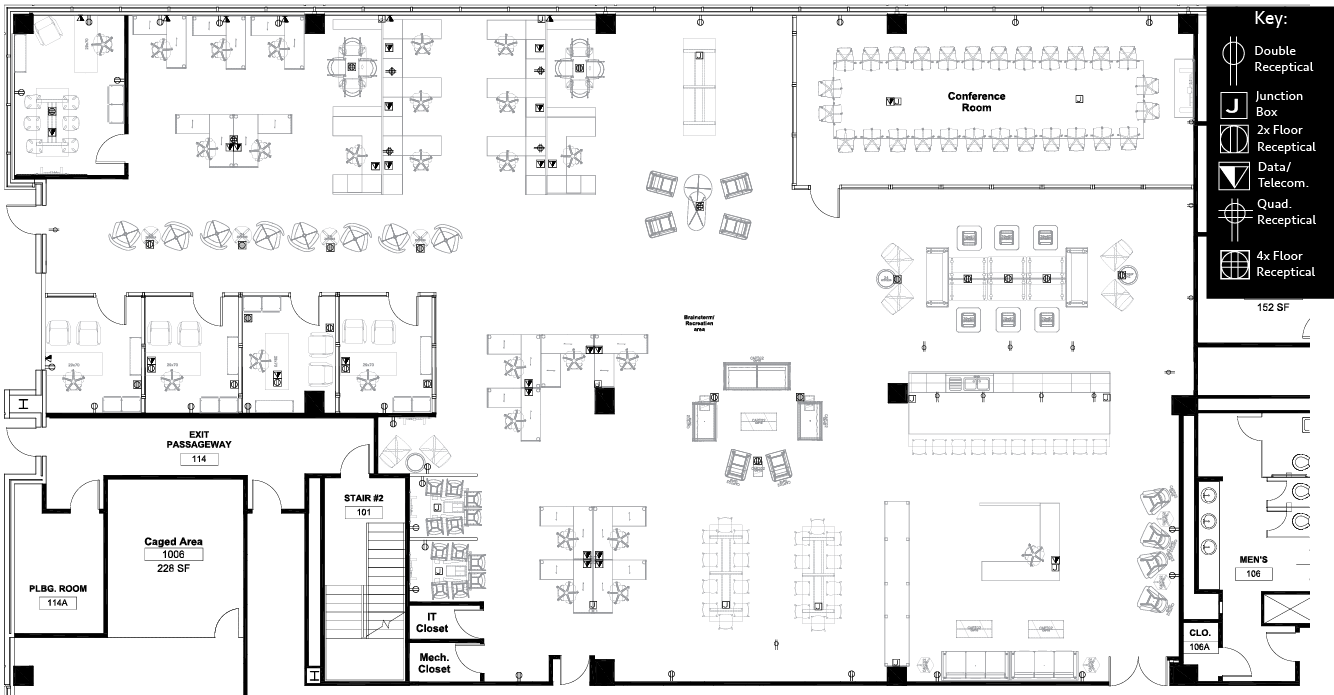
Electrical Floorplan

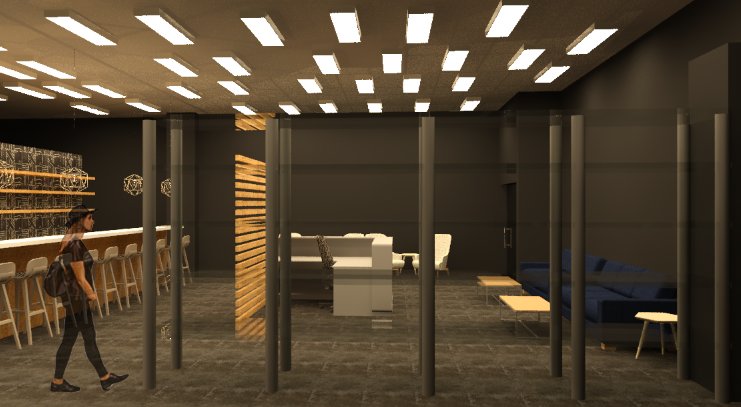
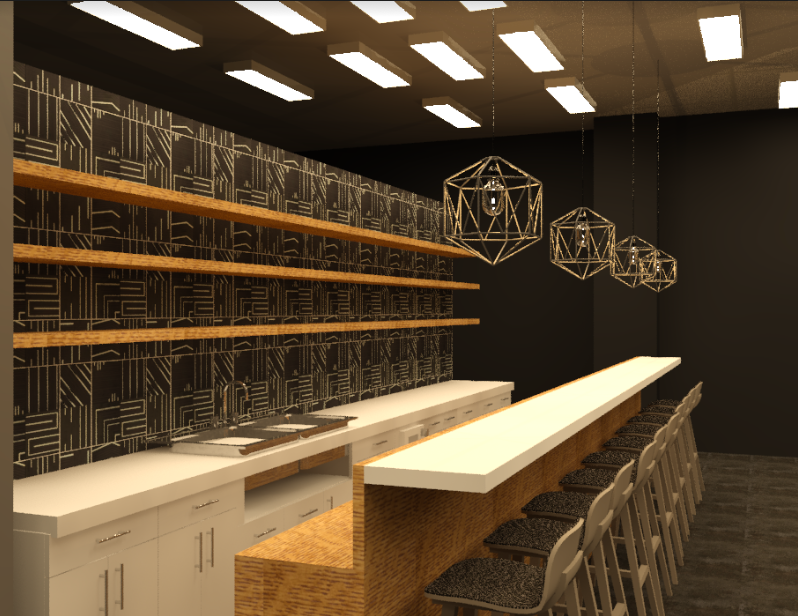
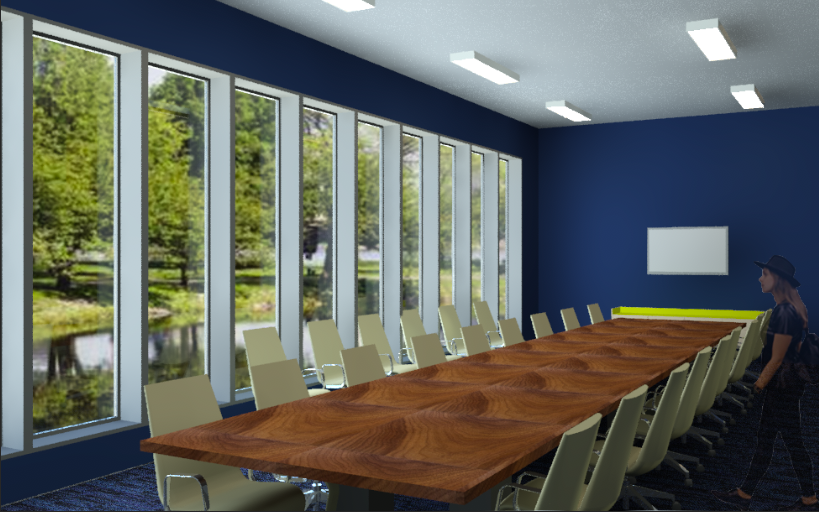
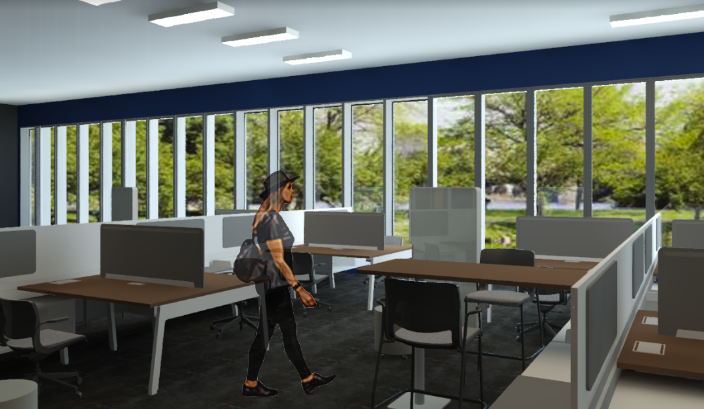
Once all of these things were completed, we were finally ready to work on our 3D models in Revit.  I designed and rendered the lobby/reception, the merchandise display case, Out of this world Kitchen and Bar, a brainstorm area, the conference room, and a typical cluster of workstations.  This final phase of the design process is the most time consuming but also by far the most rewarding.
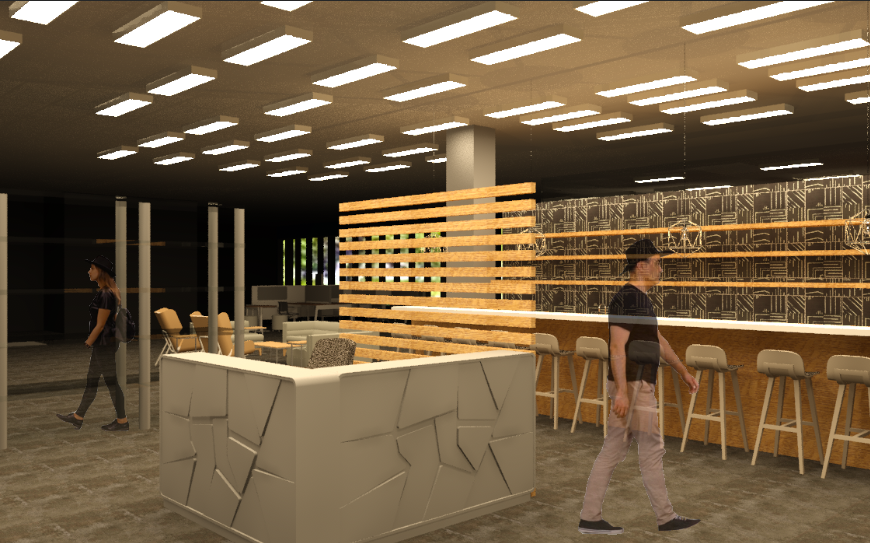
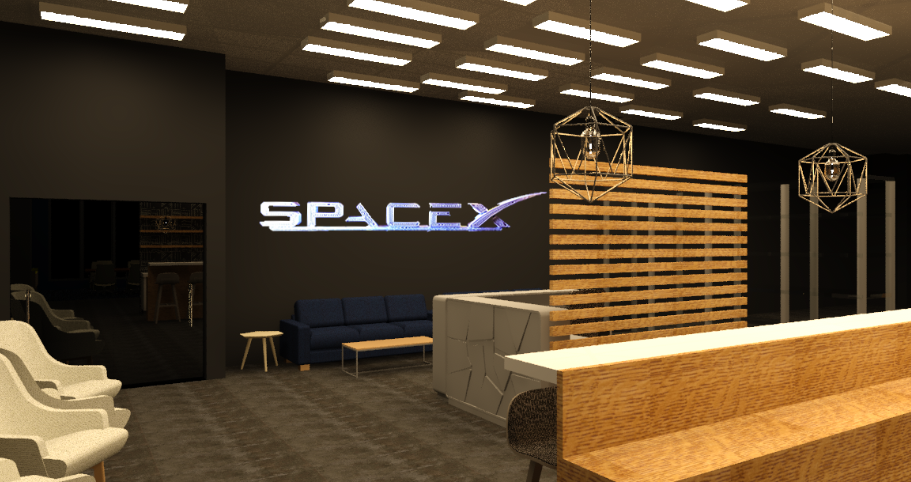
Reception Desk
Lobby
Merchandise Display Case
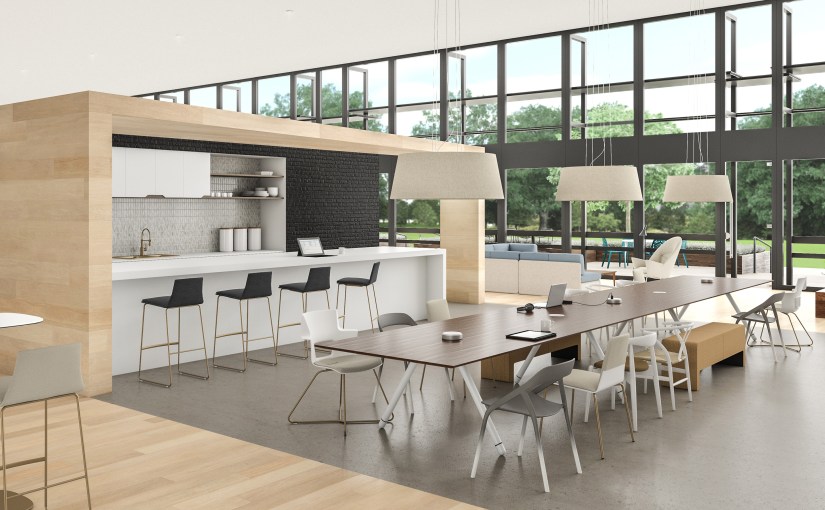
Out of this World Kitchen/Bar
Brainstorm Area
Conference Room
Workstation Area

After all of these pictures are completed, I put them in photoshop to add the people to show scale and the SpaceX sign backlit where it’s necessary. Finally, I take all of the aspects of my project and put them into a presentation in InDesign.

For this project, I chose the materials and finishes that would be used in the space and made a materials and finishes board to show the materials and label where they would be placed.
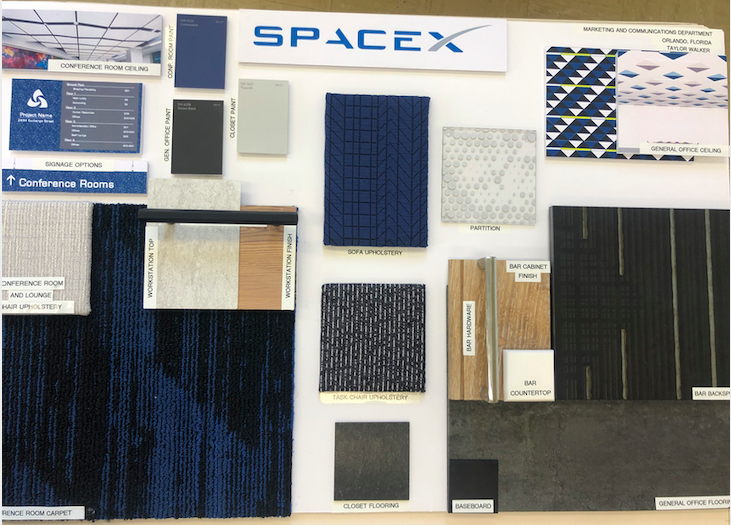
Materials and Finishes Board

All of these things combined put together a final presentation and an overall successful project.

Happy Designing, fellow designers!
Thanks for Following Along

As this interviewing journey comes to a close, I want to thank you all for following along with me!

Writing these blogs has been a rewarding experience for me and I hope to continue it in the near future.  There is so much information about the design industry that is not brought to light nearly enough and I hope this blog informs you as much as it did me about all the design industry has to offer.

If you’re just getting started, these blogs were written to inform you, the reader, about the Ins and Outs of having a career in interior design.  Each blog focuses on one specific interior designer, their journey through life, and how they ended up becoming an interior designer. Through each blog post, the designer and I worked together to debunk common misconceptions about interior designers.

If you’re interested in becoming an interior designer or just want to know more about the industry, I encourage you to read on – you might just be surprised at what you find.

Stay tuned, there’s more in store!

Happy Designing, Design Lovers!

Design in the Workplace

Our next designer, Emma, graduated from the Savannah College of Art & Design and is now a Workplace Consultant at CBI Workplace in Charlotte.

Emma loves the problem solving aspect of being a designer.

“I love to be a problem solver, whether it’s a spatial problem, budgetary restrictions or a client doesn’t have the right support and direction. I like being able to offer solutions and helping a designer or end user find success in their project, no matter the size.”

A common misconception that she faces is that the public sometimes thinks that an interior designer is unnecessary and the job is purely decorative.  As trained design professionals, we have to be thoughtful of the design for the welfare, health and safe of every personal that will experience the space.

Emma, like many other young, educated designers, learned a lot of the computer programs associated with design and still puts those into use.  She learned very useful presentation skills and how to participate in critiques. Client interaction and budgetary restrictions are two things that she feels that her education did not focus enough on and both are extremely important when you’re out in the real world.

Happy Designing, Emma!

Design Educator

This designer, Margo, has her interior design degree from Carnegie-Mellon University and she also has a Masters and PhD in education from Florida State.

This designer is not only passionate about design, but also about teaching the future of design.

Her first job in the design field was a full-time professor at Florida State University. She is now a full-time professor at Appalachian State University.

Throughout her journey as an interior designer, she has been a professor in the field for 27 years and has been a freelance designer in both Texas and North Carolina.

Her favorite part about her current job is the interaction and relationship she gets to have with her students. She appreciates the sense of achievement in seeing her students gain new skills.

Her dream job is being a residential kitchen and bath designer.  

“I like the preciseness of the design expectations and I like to improve the lives of my clients.  I see so many errors in kitchen and bath design that I enjoy the challenge of doing the right thing.”

She faces the common misconception that many other designers face, the general public does not see the technical side of what we do.  When designing we must protect the health, safety, and well-being to those whom we perform our design services. The general public only sees the aesthetic side to our work.

“I am motivated by a desire to experience the excitement and aesthetics of design while making the lives of all people more productive and pleasant.  Design is problem-solving along with the ability to consider many alternatives to make the best decision. I like the challenge of thinking of new ways to do things.”

Happy Designing, Margo!

Design in the Genes

This designer, Tracy, like me, has been around design her whole life.  She is been in the field since she graduated from the University of Georgia 25 years ago.  Her father had an architectural/engineering firm and she worked there after she graduated.

Her current job in the design field is in kitchen design and cabinet sales.  Her favorite part about being a designer is getting to be creative and influencing people’s lives in a positive way through design.

Her least favorite is the lack of boundaries in the industry.  Since you are in people’s homes and spend so much time with them, discussing their day to day living, the tend to feel like they can contact you at any time of the day or night.

Misconceptions she faces are that the general public confuses interior design and interior decorating quite frequently.

Her dream job would be to get to design yachts and airplanes, not many people get this opportunity and the budget would likely be high so the sky might quite literally be the limit for this job!

Her college education helped her with drawing basics and space planning.  However, in college you often work on projects with imaginary clients with no budget.  So when you get out into the real world you have to learn on your own how to deal with clients and their budgets.

Happy Designing, Tracy!

Sales in Design

Our next designer, Carol graduated with and interior design degree from Meredith College and her first job in the field was a Sales Rep for a Steelcase Furniture Dealer.

Her current job in the field is a contract Interior Designer for an Architectural Firm, she is not on their payroll but works with them when they have Interior Design projects.

She has been working in the field since 1986 and her favorite thing about being a designer is getting to work with clients and help them create great work environments for their employees.  Her least favorite is working with clients who are close minded about other ideas for their spaces.

While she is a commercial designer in the Charlotte area, she is also a part time professor at Appalachian State University teaching commercial office design.

As with other designers, since being in college so much has changed with the technology in the design field, catching up has been a challenge.

Happy Designing, Carol!

Self Taught Designer

This designer, Kendra has always had an eye for design.  It wasn’t until recently that more and more people were going to school for design.  So when she went to college, her parents pushed her to take a different path, she majored in communications.

After she graduated, her friends would ask her to help them decorate their homes.  Since she had a great eye for design, she decided to turn her passion into a career.

She’s been a designer in the Charlotte area for almost 20 years and has her own design firm, Pheasant Hill Designs.

Pheasant Hill Designs is a full service design firm specializing in kitchen and bath design.

Her favorite aspect of being a designer is that no two days are ever the same.  Some days she is designing a kitchen and the next she is sourcing wallpaper and furnishings.  She emphasises how important it is to communicate with the client about both their needs and expectations.

A common misconception that she faces is that everyone thinks that being a designer is glamorous, everyday and all the time.  Which is not the case. Designers spend a large about of time on the job site and are always on the go, taking the products to and from warehouses and homes.

Her communications degree has helped her with client interaction but everything she learned in the design field is completely self taught.

Check out some of Kendra’s work!

https://www.pheasanthilldesigns.com

Happy Designing, Kendra!

Film Produc- … Designer

The next designer has his degree in TV and Film Production – but that’s not quite what he does now.

He became interested in interior design while decorating the TV sets and learned all about art direction and production sets.  While doing this, he learned a lot about the principles and elements of design and learned how to mix colors, textures and patterns as well as a lot about building codes, egress, and ADA codes.  

He loved all of this so much that started to buy furniture and other items from flea markets and would refinish and sell them at garage sells three times a year.  That’s when he knew he could turn this passion of his into a career.

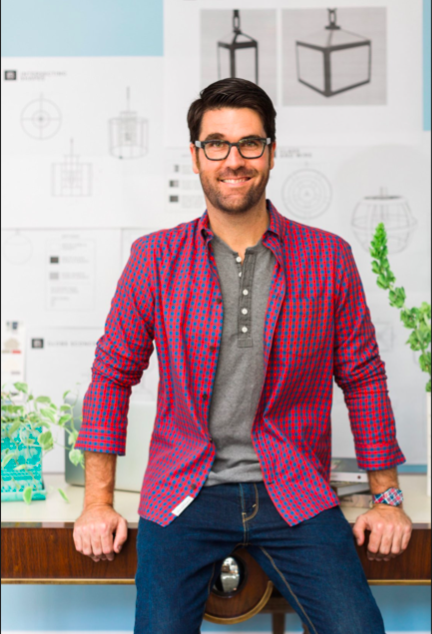
Brian Patrick Flynn is our designer we’re focused on this time and has turned his side hobby into a massive design career.  He has his own design firm that focuses on residential spaces and also designed the HGTV Dream Home and the HGTV Urban Oasis.  He also has his own original line of lighting with Crystorama lighting.

His favorite part about being an interior designer is getting to stage his finished projects and have them professionally photographed.

While he loves what he does now, his dream job would be to design products for the home.  This allows him to be as creative as he can and finds it very fulfilling to see products such as furniture, fabrics, wallpaper, and lighting that he created come to life and look stunning inside a home.

He as a designer, struggles with “all of the logistics of dealing with construction messes, the insane logistics of installing a house, and then there is also the constant 24/7 checking in with clients to make sure they’re okay with everything that’s happening in their home. After a while, wearing so many hats as a residential interior designer can really drain you of nearly all your energy”. He also says that in between huge projects, a vacation is mandatory.

“People seem to think the world of interior design is super glamorous and mostly about making things pretty all day; however the truth of the matter is that 75% of this industry is preparation, putting together pitches, dealing with budget cuts, supply chain management, and constantly having to be as flexible as possible to achieve somewhat of one’s originally intended look while navigating all the surprises that come up along the way and change the direction. Sure, that 75% is remarkably stressful and spent in front of a computer or sitting down with architects, builders, contractors and vendors, but the 25% that allows creativity to be the main focus makes it worth it.”

He reiterates his training with TV sets and film production has helped him tremendously in his career as an interior designer and is actually very similar to designing a home. In both settings you have tons of key players that are crucial to the projects.  You have to be willing to work alongside other professionals in order to have a finished product that you and your client are sure to be pleased with.

Check out some of Brian’s work!

Home

https://www.hgtv.com/design/hgtv-dream-home

Happy designing, Brian!

Student, Designer, Educator

Our next designer has a Bachelors from Iowa State and Masters degree from Cornell University, both in interior design and specializes in commercial interiors and lighting design.  

Jeanne has been a designer for 30 years and is now an Associate Professor in Interior Design in the Department of Applied Design at Appalachian State University but still designs for clients on the side.

Her favorite part of being a designer is problem solving, the combination of art and science, and making great spaces for people.  Her least favorite is working for unprofessional people and working with people who are poor-planners and do things last minute.

Jeanne was lucky enough to have her dream career, she was a commercial designer for restaurants both here in the United States and internationally.  Her work was published in many magazines and books. She worked on high profile projects and had a great boss and coworkers. She says she know has her second dream job, getting to share her knowledge and shape her students into successful designers.

Common misconceptions that she has faced are “The misunderstanding between interior decorating and interior design that is perpetuated in the media, mainly by the general public, and their misuse of terminology. I understand construction, codes, etc. I approach things from a human behavioral and conceptual basis.”

She said that her education did give her the basics in interior design, you can only learn so much in four years, but her actually job experience helped shape her into the designer that she is today.

Check out Jeanne’s side design business http://www.envistudio.com.

Happy designing, Jeanne!

Designer by Experience

A degree in interior design isn’t always required to work in the design field – unlike many other professions, you can learn a great deal about design just from doing it and educating yourself.  

The next designer we dive into is a cabinet designer who doesn’t have a design degree but instead learned how to design by being around design and the products of the design.

Our designer, Brandon, started working in carpentry.  He landed a job from his brother-in-law, a custom cabinet builder, and started building the cabinets.  After a few years he worked his way up to installing the cabinets, all the while he was learning everything there is to know about how cabinets are made and how they fit and are placed into spaces.

As the years went on and Brandon’s knowledge grew and he had a hungry to keep learning and growing.  After 10 years of building and installing cabinets, Brandon transitioned into a sales position within the same company which led to him learning the design software and becoming a cabinet designer.  

His strategy with customers is to assure them that from his 10 years of experience has given him he knowledge to design the kitchen and bathroom cabinets to give them the custom functionality that they need while also being very aesthetically pleasing.

His favorite part of being a designer is getting to work with the customers, builders, and trade vendors and getting to develop a relationship with them.  He struggles in his career when the customers or builders have unrealistic timeline expectations and when they assume a remodel will be completed in no time.

Brandon’s common misconception about the design field that he constantly battles with is how some of the other designers and builders he works with are not always professional and there is no set of clear standards and practices that everyone of them follows, making each job its own separate challenge.

Brandon’s dream job in the design field would be “Coaching and Consulting in the Construction and Design Industry”.  His passion lies in personal and business growth and helping others discover and achieve their goals. He finds it deeply rewarding to help others achieve their personal and business goals or overcoming hurdles that are holding them back.

Happy designing, Brandon!